Ajay Malgaonkar


Ajay is a seasoned technology leader with over 28 years of experience driving digital transformation across global enterprises and helping clients achieve their strategic objectives. Ajay’s passion for innovation-led growth, coupled with his ability to scale operations while maintaining agility, makes him a natural fit for Agivant’s mission.
Before joining Agivant, Ajay spent a decade at Prolifics Corporation, a US-headquartered digital engineering firm, where he led integrated engineering teams and delivered transformative AI-driven solutions to marquee clients. His focus on innovation, scalability, and agility made him a key architect of Prolifics’ digital success.
Earlier in his career, Ajay spent ten years at Infosys, where he led the digital practice and delivered large-scale, complex e-commerce and transformation programs across North America, Europe, and the Asia-Pacific region. Ajay’s impact has been widely recognized in the industry. In 2023, he was named one of India’s Next 100 Future CIOs by ITNext and received the ET Inspiring Leader Award.
He holds a Bachelor's degree in Engineering from Sardar Patel College of Engineering and a Post Graduate Diploma in Information Systems from the Somaiya Institute of Management Studies and Research in Mumbai. Ajay’s career reflects a consistent ability to scale digital operations, lead high-impact transformations, and inspire cross-functional teams to deliver value with speed and precision.
Sandeep Kishore

Sandeep is a proven CEO, key strategist, and trusted board director with over three decades of experience in the technology industry. He is a highly effective coach and mentor, known for his bold thinking and innovation. Throughout his career, Sandeep has demonstrated a remarkable ability to create and grow successful businesses.
Before founding Agivant, Sandeep served as an Executive Partner with Siris Capital Group, a leading Private Equity firm. Prior to that, he was the CEO & MD of Zensar Technologies from 2016-2021, where he spearheaded a massive turnaround, transforming the company into a fully digital enterprise. This successful transformation was featured as a case study by both Harvard Business School and London Business School.
Sandeep's career also includes over 25 years at HCL Technologies, where he held various leadership roles and built several billion-dollar businesses. An alumnus of IIT Bombay, he is a dedicated board advisor, mentor, and passionate advocate for social impact. He co-founded the Har Asha Foundation, a philanthropic initiative focused on helping young adults develop essential workforce skills. Beyond his professional achievements, Sandeep is also a published poet with two acclaimed books.
Shree Krishna Somani
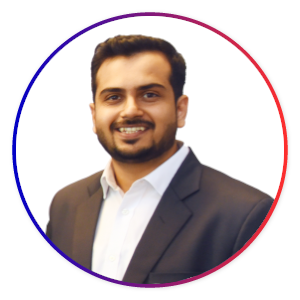
Shree is a dynamic and accomplished leader, uniquely positioned at the intersection of finance, strategy, and technology. As Head of Business Success at Agivant Technologies, he is focused on driving client centricity and overall organization effectiveness. He has a proven track record of delivering impactful results in leadership roles, consistently demonstrating an ability to translate vision into tangible outcomes.
Prior to Agivant, Shree served as Assistant Vice President at Aavas Financiers Ltd, where he led Business Process Re-engineering and Digital Transformation initiatives, showcasing his ability to modernize operations and enhance efficiency. He also contributed to enterprise risk analytics and strategic planning. Earlier, during his tenure in the CEO’s Office at Zensar Technologies, he played a pivotal role in driving corporate and business strategy, advising on M&A evaluations, and leading key strategic initiatives for the CEO. Shree began his leadership journey with the Aditya Birla Group Leadership Program.
An alumnus of XLRI Jamshedpur and University of Delhi, Shree blends a strong academic foundation with extensive practical experience. This combination underpins his proven ability to drive significant impact and deliver compelling business results across complex organizational landscapes.